
Vesuvius and Pompeii
An active volcano and the city it buried: they fit into the same day, and should be seen in that order.
In October of AD 79 Vesuvius buried Pompeii under six metres of pumice and Herculaneum under twenty metres of mud. What was the end for the two towns is the reason they survive: not ruins stripped over the centuries, but houses with the furniture still in them, shops with their signs, bread in the ovens.
Pompeii
Sixty-six hectares, of which some fifty excavated: it is the largest archaeological site in the world and you do not see all of it. An honest visit lasts four hours and follows a chosen route (the forum, the baths, the House of the Vettii, the theatre, the amphitheatre) rather than trying to see everything and seeing it badly. There is no shade: go in at opening time.
Herculaneum
Herculaneum is a quarter of Pompeii and in many ways more striking: the mud sealed it rather than burying it, which is why the roof beams, the wooden doors and the beds are still there. It takes two hours and sits inside the modern town, with the excavation below the level of today's houses.
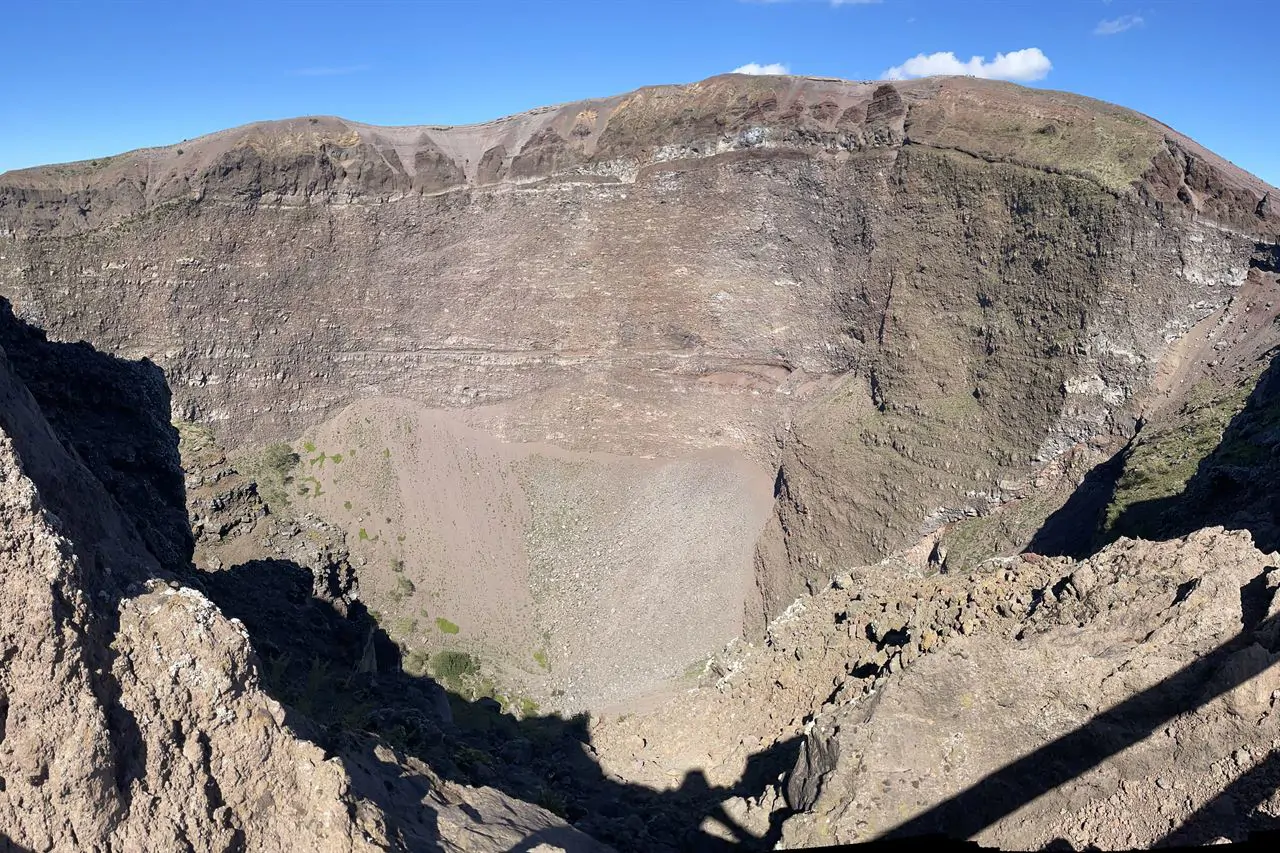
The crater
You drive up Vesuvius to a car park at a thousand metres, then walk for half an hour up a gravel path to the rim. From up there you see the whole bay, and you grasp something that escapes you from below: how many houses there are, and how close.