
An active volcano, a rich plain and three hundred and fifty kilometres of coast
Behind the coastal belt Campania is Apennine: real mountains, little visited, where in summer you can breathe.
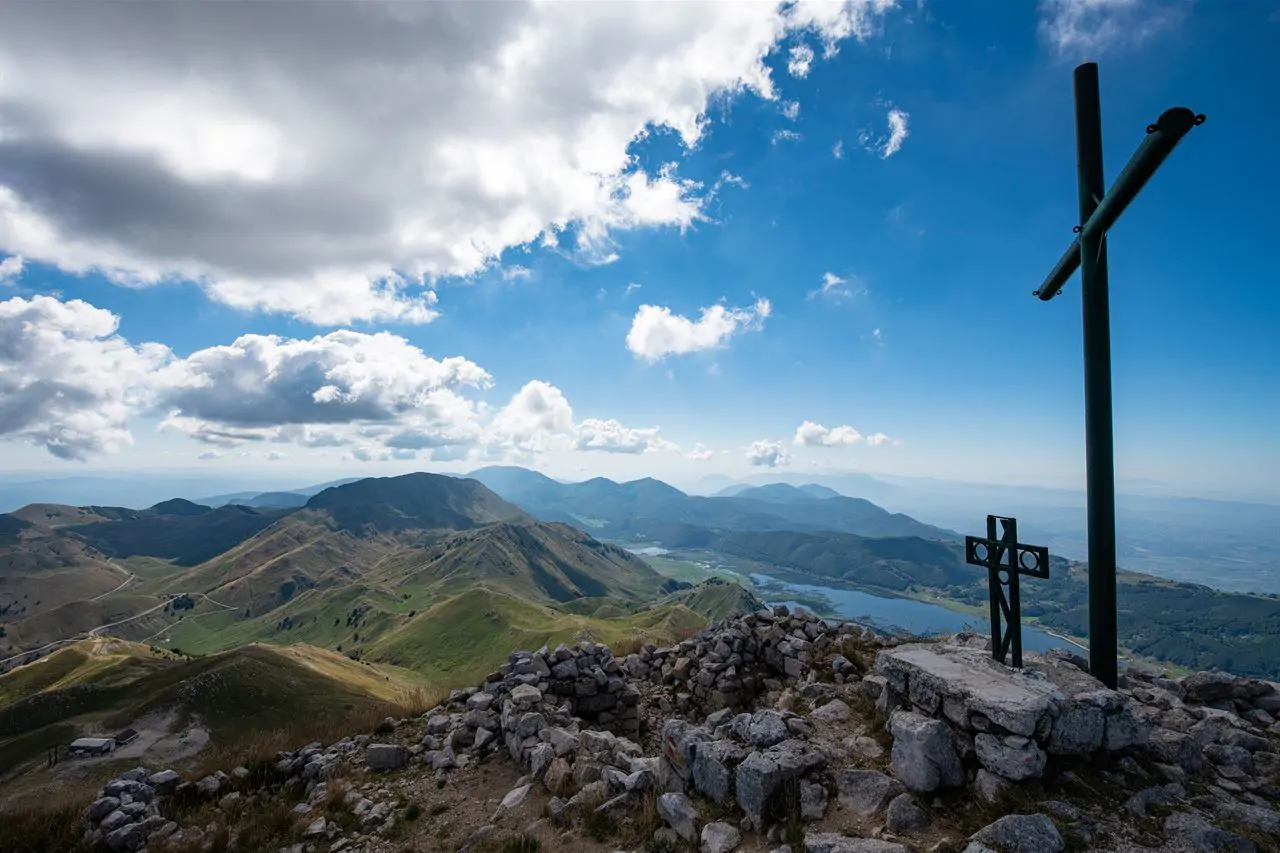
The Campania people know is a strip twenty kilometres wide along the sea. Behind it lies all the rest, and it is Apennine: Irpinia, the Sannio, the Matese, the Picentini mountains, the Alburni. These are mountains between one and two thousand metres, with beech and chestnut woods, pastures and villages that in summer sit fifteen degrees below the coast. Almost nobody holidays there, and that is both their drawback and their merit.
Vesuvius and the Phlegraean Fields
Vesuvius is one thousand two hundred and eighty-one metres high; you drive up to a car park and then walk for half an hour to the rim of the crater. It is an active volcano in a quiet phase, and six hundred thousand people live below it. On the other side of the bay the Phlegraean Fields are the same thing seen inside out: not a cone, but some forty overlapping craters, with the Solfatara still steaming and Lake Avernus sitting inside one of them.
The plain
Between Caserta and Salerno lie two alluvial plains that are among the most fertile land in Italy: the Volturno plain and the Sele plain. They are the reason the region is called what it is: campania felix, the fertile countryside. This is where buffalo mozzarella, the San Marzano tomato and a good share of the vegetables on half of Europe's market stalls come from.
The coasts
Three hundred and fifty kilometres of coast that change four times. North of the Volturno it is low and sandy, with the pine woods of the Domitian shore. In the bay of Naples it is urban almost throughout. From the Sorrento peninsula to the Amalfi Coast it turns vertical, with the villages hung on the slope and the beaches small. From the Cilento southwards it is high again but wild, with long stretches of nothing.